
Deutsche Telekom said on November 19 that its T.Capital Tech Fund had invested €100 million in Mistral AI’s Series D. The group described the investment as a first step toward a strategic partnership. It wants to combine its infrastructure, enterprise relationships and integration work with Mistral’s models, software and deployment capabilities for German companies and public institutions. A share purchase and an eventual customer contract solve different problems. The investment puts both companies at the same table when the terms of that service are designed. Deutsche Telekom’s announcement · Tagesschau’s coverage
The strategic attraction lies in bringing several purchasing decisions closer together. A German manufacturer may already procure network services and systems integration from an established vendor. It may still have to approve an AI model, find a place to run it, decide who can inspect its data and establish who answers for outages. Deutsche Telekom and Mistral are positioning themselves to address those decisions together. The amount invested is known. Customers, contracts, licence terms and revenue for a joint offer remain to be disclosed.
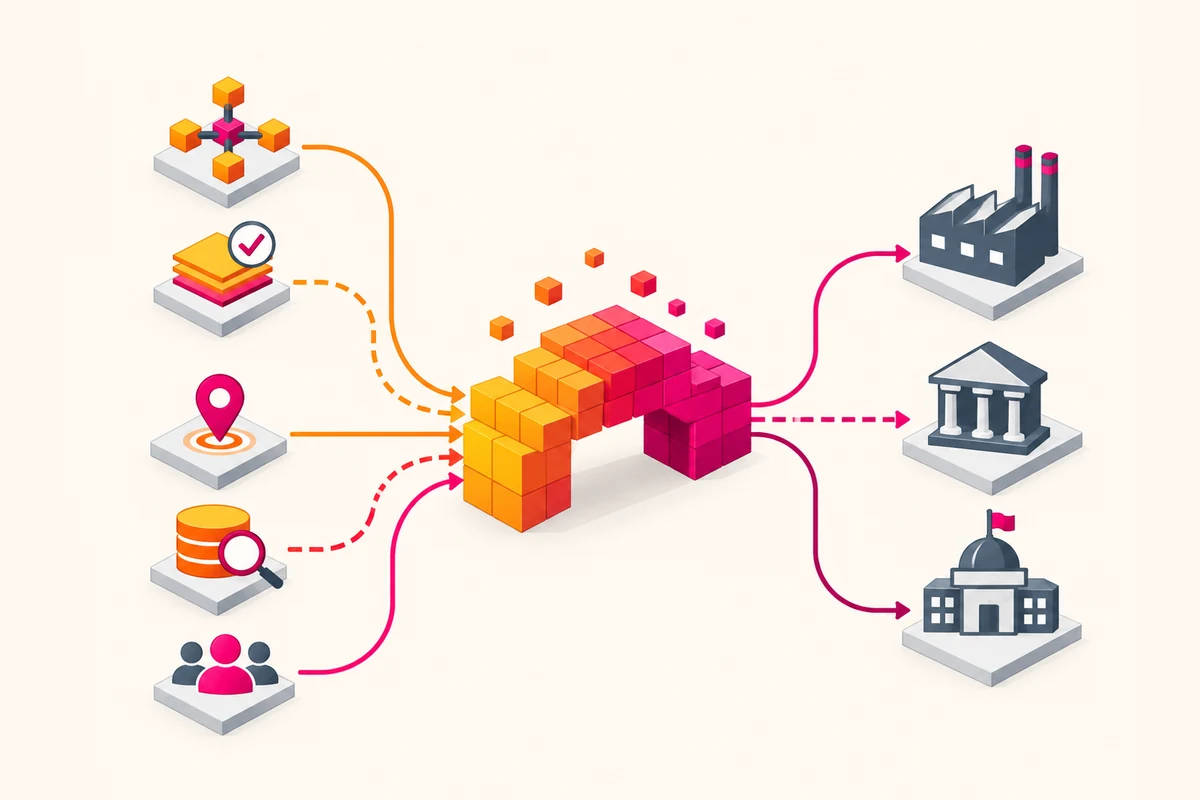
This is an investment in a possible route to market. For Mistral, an enterprise channel can reduce the work of finding buyers and connecting software to their systems. For Telekom, a stake gives it exposure to a model maker while its infrastructure and integration businesses gain a potential supplier. An announcement makes those incentives visible. It will take named deployments and repeat contracts to show that the partners can convert them into a profitable service.
The November disclosure belongs to an earlier round#
Mistral announced in September that it raised €3 billion in Series D funding at a post-money valuation above €21 billion. Samsung Electronics led, with Scaleup Europe Fund, managed by EQT, and PSG Equity as co-leads. Mistral described its plans to fund research, expand compute and grow its commercial reach. The German telecom group’s November statement identifies its €100 million as participation in that Series D, while providing no revised round total or completion date for its individual purchase. The September figure and the later disclosure should each be read on their stated terms. Mistral’s September financing announcement
Using the original figures for comparison, €100 million is about 3.3 percent of €3 billion. That calculation measures the disclosed contribution against the previously announced round size. It gives no purchase percentage in Mistral. Shares and voting power depend on the price, class of security and any other terms. Neither announcement provides enough information to calculate Telekom’s fully diluted ownership, rights concerning later financing or governance role. An equity figure this round would need to come from a filing or an explicit disclosure.
The party making the investment is T.Capital Tech Fund. Deutsche Telekom says T.Capital manages more than €2 billion on its behalf. The fund’s investment strategy page sets out a typical €50 million to €300 million ticket for the Tech Fund and describes pilots and joint sales as tools it can use. A €100 million ticket fits that stated investment range. The fund’s own description of its strategy leaves the rights in this deal open. The fund can take a meaningful position in a business without the public knowing the terms needed to assess relative ownership. T.Capital’s investment strategies
The potential return also has two separate accounting destinations. The investment vehicle could gain or lose value as Mistral grows or raises capital. Other Telekom businesses could earn money from cloud capacity, integration or ongoing support. A company might make an attractive investment without generating material sales through its operating divisions, or earn a return from selling services despite a disappointing equity performance. Measuring the combined strategy requires seeing where money is actually earned.
The parties disclosed the investment in euros. Different dollar conversions can reflect different exchange rates and rounding even though the underlying transaction stays the same. The investment amount, cash raised across the round and estimated company value are also separate figures. Keeping their units and dates straight shows exactly what Telekom committed and where its ownership remains uncertain.
The same discipline applies to the investor’s identity. An institution may see Deutsche Telekom’s group brand on a proposal. Its equity exposure sits with T.Capital Tech Fund, while the account team, infrastructure operator and model vendor could sign different obligations. Knowing which organisation received the money and which one makes a service promise helps explain how a partnership can create value. The project can run into a commercial dispute even while the investors agree on Mistral’s prospects.
A previous strategic investor disclosed more of the bargain#
In September 2025, semiconductor equipment maker ASML announced that it had led Mistral’s Series C with a €1.3 billion investment. It disclosed an initial stake of approximately 11 percent on a fully diluted basis, a seat on Mistral’s strategic committee and a long-term collaboration agreement. Its public materials also describe work on customised solutions using ASML source code and documentation. These disclosures provide a useful example of how a model developer can bring a commercial relationship into view alongside an investment. They give a reader separate evidence about ownership, rights and application work. ASML’s partnership announcement · ASML’s account of the collaboration
The two investments also involve different commercial roles. ASML is interested in improving its own products and work, according to its announcement. Deutsche Telekom describes a plan to serve third-party companies and public bodies. A supplier and a customer can negotiate one custom deployment and evaluate the results for themselves. A channel relationship must transfer that experience across buyers whose systems, rules and budgets differ. It can reach more customers, with greater uncertainty about how much bespoke work each sale entails.
The commercial opportunity for an infrastructure provider starts with contracts that match its strengths. Bringing a model to an enterprise can require a local service team, billing in a familiar form and integration with access controls and data systems. A successful partnership can make those decisions easier for a buyer. Contract structure still has to allocate who supplies capacity, who licenses the model, who owns changes and who provides support when a joint deployment behaves unexpectedly. A customer receives the benefit only when a reliable set of obligations arrives with the technology.
Likewise, an investor’s presence does not guarantee that its preferred platform will win every customer. Many buyers use different providers for different applications. A procurement team may choose a cheaper model for a bounded task, a hosted service for fast deployment and an internally run model for sensitive data. The partnership’s advantage will vary across these cases. A stronger test than the number of introductions would be how often a paying customer renews because the complete package works on acceptable terms.
A large customer can also split its purchase by outcome. One provider may run a pilot against a set of document questions while a second competes for a longer contract to support several departments. A local integration partner can help Mistral through the first phase. The later award depends on testing, fit with the rest of the buyer’s systems and the terms offered by competitors. The partnership’s ability to stay in the deal at this second stage is more informative than the number of trials either company can announce.
Munich gives the relationship a physical starting point#
Telekom switched on its Industrial AI Cloud in Munich’s Tucherpark in February with NVIDIA and data centre partner Polarise. On November 9 it announced additional spending of nearly €250 million and an expansion to 20 megawatts using more NVIDIA systems, including Blackwell Ultra B300 hardware. The operator said the initial expansion stage was sold out. That is a company description of demand for its capacity, with no public allocation of those megawatts to Mistral in the investment announcement. The expenditure on facilities and the T.Capital share purchase belong to different budgets and create different obligations. Telekom’s cloud launch · Telekom’s expansion announcement
A megawatt describes a power capacity. For a customer, the meaningful quantities are the price of a workload, how long it takes, how predictably capacity is available, and how the service behaves under different traffic. A bank summarising a large archive needs a different response pattern from an engineer waiting for a simulation. It cannot infer its latency or bill from a site’s power rating. A partner’s offer needs a connection between the facility’s capabilities and the portion of those capabilities available under a particular service contract.
Mistral opened a Munich hub in September. It described a combination of specialised research and engineers working with local businesses, including BMW on crash simulation and engineering AI and Siemens Energy on industrial applications. The hub and the cloud give the partnership nearby teams with relevant work. These organisations and projects predate the November investment announcement. Their existence establishes a line of activity in Germany. The present disclosure leaves open whether any of them will buy a new Telekom and Mistral product together. Mistral’s Munich announcement
Proximity matters where an installation requires people to visit the customer, interpret a legacy workflow or run trials against a secure dataset. A manufacturer often needs more than API access. It needs the model, the data provider and an engineer who understands what counts as a valid result on a particular machine. A research team can produce a model that performs well in a controlled exercise. A local integration group can establish what happens to output quality, response time and responsibility after that tool reaches a production line.
Physical capacity is also time-sensitive. Accelerators cost money while waiting for workloads, and projects need enough machines when demand peaks. A predictable enterprise customer can help a cloud operator schedule capacity and justify investment. A batch workload can sometimes wait until cheaper capacity is free. A control-room tool may need a much tighter service guarantee. Munich supplies a credible infrastructure starting point. Unit economics depend on who reserves capacity, who pays when it sits idle and who can shift demand between customers safely.
A service that promises to remain available through maintenance and disruptions may have to hold reserve capacity and keep a second copy of data in an approved location. A corporate buyer may be happy with scheduled downtime for a tool that helps engineers search manuals. The same buyer may require round-the-clock support for a service used by several plants. These two customers could use the same model while paying for different facilities and operations. An agreement about availability can therefore be a material part of the price.
Sovereignty becomes a contract when a customer buys it#
The companies describe their aim as sovereign AI for German institutions. Location is one part of that proposition. A customer may also ask where backups are kept, who can access operational logs, which entity approves software changes, how administrators are supervised and which suppliers are required to keep the service running. A service can keep a workload in Germany while depending on chips, software updates or support from elsewhere. These facts can coexist, and a customer can decide which dependencies its use case permits.
Consider a hypothetical manufacturer that wants an assistant for confidential repair documentation. Keeping material on infrastructure in Germany may satisfy one purchasing requirement. The manufacturer still needs assurance that support personnel cannot casually read the files and that an answer cites the right revision of a procedure. It may want the option to operate a different model on the same infrastructure if the first one changes its price or quality. When the agreement answers each of these questions in operational terms, the label on the offer starts to have concrete value.
Open model weights can give buyers options. They create the possibility of testing or hosting a model in an environment the customer governs, subject to licence rights and the resources needed to maintain it. A model can be technically movable and still be expensive to migrate if its deployment depends on a specific data format, integration layer or custom evaluation process. The customer needs to know which artefacts can travel with it, what rights apply to updates and whether another operator can reproduce its service from the same materials.
A public institution might evaluate a different set of questions. It could require a public tender, an accessible service and records for later review. A department using a model to help find documents has a different risk profile from one using it to help make a benefits decision. Potential participation in these markets explains why local delivery and procurement familiarity are interesting. The press release gives no tenders, budget allocations, approvals or delivery dates. Those are independent steps for any specific agency.
Language provides a relatively inexpensive way to test some of this. A call centre can evaluate the software against German requests, equipment terminology and ambiguous abbreviations that match its work. A training benchmark that contains other tasks or languages answers a different question. The buyer needs a clear baseline, a manageable group of mistakes and a process for recording corrections. Results also have to survive a model update. An integrator that brings training and tests to this work can offer a stronger reason to pay than a claim about the nationality of the model alone.
Banks and insurers can ask about who is accountable when AI changes a work process. An agreement that says where data stay may also need to specify incident response, access to evidence, changes to models and the route for bringing a service back in-house. These items are often written outside the model licence. A combined offer can put them in clearer reach if it establishes a direct, usable support relationship. The public will be able to judge the commercial claim when the companies describe what such an arrangement includes.
The sales opportunity depends on paying for the entire workflow#
One possible price structure is a subscription covering a platform and a volume of model use. Another is an infrastructure reservation plus separate fees for software, integration and support. A buyer can compare them by estimating expected workload, peak load, staffing for review and the costs associated with downtime and maintenance. A low quoted inference fee can coexist with a larger total expense when an internal team must prepare data or inspect a large share of responses. The most useful price disclosure would let a customer locate those costs before a pilot becomes a permanent service.
Suppose an industrial buyer uses a model to route maintenance questions to approved documents. With a compliant response and sufficient volume, staff may spend less time searching. The cost comparison should count the electrical and hosting resources, the effort of preparing documents, the work of checking accuracy by language and the support needed when plans change. The paid contract needs to allocate each job. Without an explicit division, a supplier may invoice for compute while the customer quietly absorbs more operational work than its budget anticipated.
For Mistral, the financial argument turns on how much of that work can be reused. A deployment in one plant can teach it how to integrate with equipment records or run in a given environment. If the same components can serve ten comparable buyers, revenue may grow faster than the cost of engineering. If each installation requires extensive, custom data cleaning and new controls, scale can look more like professional services. Both activities can produce revenue, with different margins, cycles and requirements for people.
For Telekom, cloud use is attractive if revenue supports the costs of its capacity and customer obligations. Joint bids could fill infrastructure, while the model business widens what its sales teams can offer. Such a benefit depends on utilisation and commercial terms. Equipment depreciation and long support commitments continue even when demand moves to cheaper models or a customer’s pilot stalls. The group did not tie the €100 million investment to a minimum capacity purchase in its release. The expected consumption of cloud resources is therefore a question for future contracts.
The two firms can also learn from the contracts they decline. For example, an industrial group could ask for a fixed fee covering continuous use at dozens of sites, while the required workloads and support volume are still unknown. If the price assumes that many requests can be processed cheaply, the economics will change when the customer switches to larger models or adds languages. A pilot with agreed acceptance criteria and a budget for expansion lets both sides learn about costs before committing to a long-term price. The repeatable business will depend on which parts of that uncertainty the provider can measure and assume.
Shareholder interests and customer interests can also diverge. As an investor, Telekom benefits when Mistral does well. As an enterprise supplier, it may need to recommend whichever model is suitable and cost-effective for a customer’s task. Other providers may likewise want Telekom to host their models. A productive partnership will make incentives visible in procurement, with the choice of model and deployment terms open to inspection. The investment can align the two firms without making every sale identical.
What an operating partnership would make visible#
A later announcement can establish whether a formal partnership has commercial terms, identify the product and name who is responsible for its support. It can also show which routes buyers will be offered, from a Telekom-operated service to software deployed in a customer’s own environment. Credible deployment evidence would specify the workloads, responsibility for data and the performance measurements appropriate to each use. General training capacity and a list of interested companies do not give a buyer that information.
Investors can keep three timelines apart. The first is the equity investment, marked by Telekom’s disclosure. The second is infrastructure, with the Munich facility already operating and a separate expansion underway according to its operator. The third is customer adoption. It takes longer because the partners must offer terms, integrate software, win procurement decisions and retain customers. Confusing those timelines makes every improvement at the data centre look like evidence about revenue from Mistral. Separate reports will show how closely those activities reinforce one another.
The proposed channel has a sensible fit. Mistral develops models and offers deployment options, while Deutsche Telekom has local infrastructure and established customer relationships. The €100 million shows the telecom group is committing capital to that relationship. It remains possible for buyers to prefer older suppliers, choose lower-cost models or decide that the needed integration takes too much time. The value of the investment will be better understood when the partners can point to an operating deployment for a paying customer, explain where it runs and show why the buyer keeps it.